
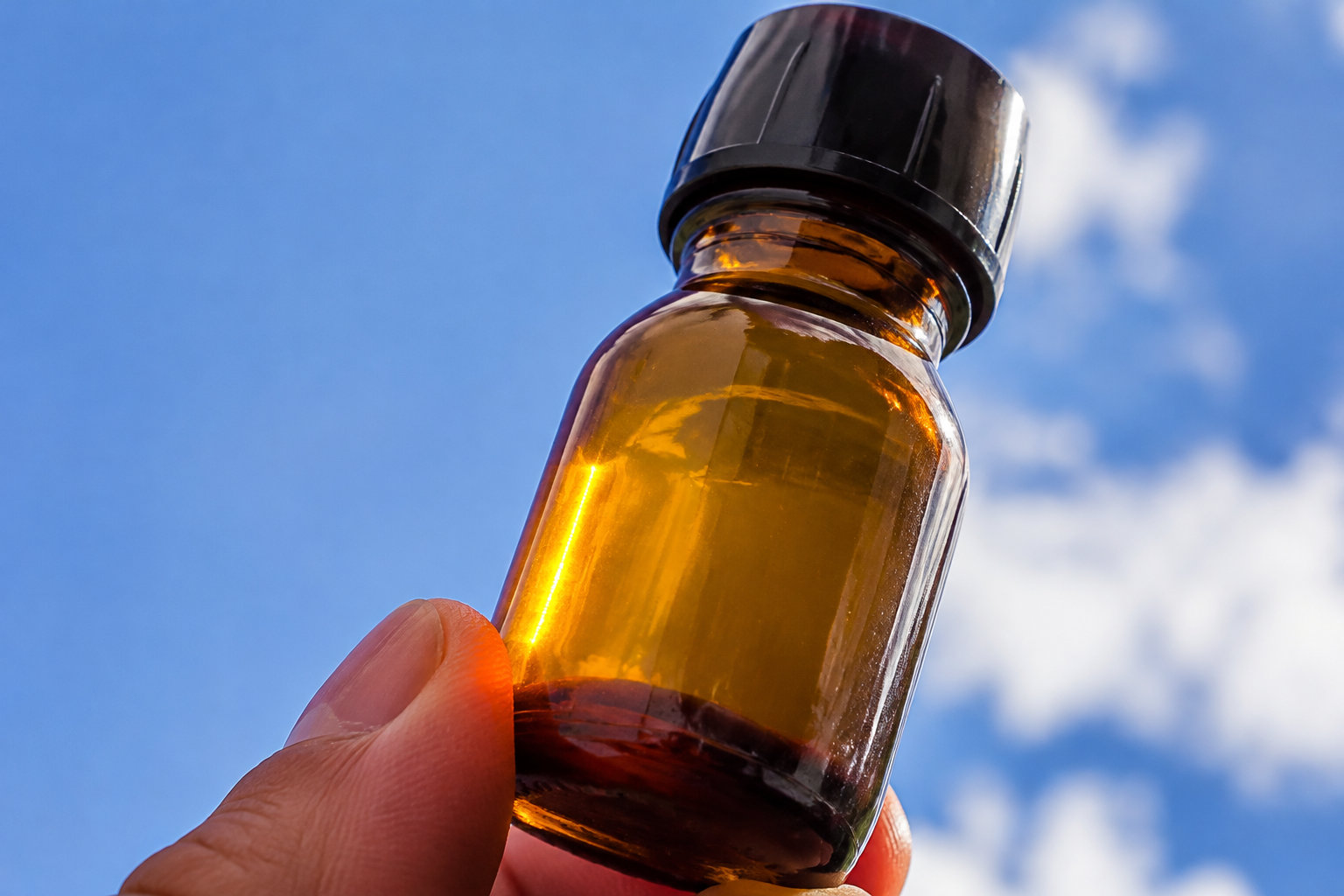
- Poppers lose strength over time, even when they look fine.
- No official UK rule sets an expiry for opened bottles, so check yours.
- A stale bottle may smell wrong, look changed or feel weaker, so replace it.
- Stop at once if you get a bad headache or trouble breathing.
- Keep it tightly closed, cool and out of the sun.
- Dispose of an old bottle through your council, never down the sink.
Table of contents
- Expired poppers lose strength through air, heat and light
- How do you know a bottle has gone stale?
- Shelf life after opening has no official standard in the UK
- Why stale poppers can make headaches and breathing problems worse
- Storing poppers in a cool, dark place with the cap tight
- Disposing of an old bottle through your local council
- Frequently asked questions
Poppers lose strength over time, and nobody notices at first. That is annoying, because the bottle in your drawer can look fine while it is already weaker than it was.
This article explains whether poppers go off, and how to tell when a bottle has gone stale.
Expired poppers lose strength through air, heat and light
Poppers lose strength over time, and nobody notices at first. The liquid evaporates a little more each time the bottle is opened and air gets in. Heat and sunlight speed this up.
The fix is simple. To understand the effects and health risks, read the rush poppers guidance first. Buy small bottles, and buy them often, so you never pay for a flat one.
The date on the label is only half the story, and storage matters just as much. A bottle left warm or with the cap loose goes off faster than one kept closed and cool. Even so, careful storage is no guarantee that an old bottle is still fresh, so check it before you use it.
How do you know a bottle has gone stale?
Three signs show that a bottle has gone stale, and you can check each one in seconds:
- Smell: fresh poppers smell sweet, but a stale bottle can smell like dirty socks.
- Colour or texture: a brown colour is a clear warning on some brands, but it is not a reliable test for every bottle, so also watch for any change in thickness.
- Strength: if the effect is clearly weaker than you are used to, the bottle has gone stale.
If the smell or appearance has changed, don’t use the bottle. A weaker smell can mean it has lost strength, but smell alone cannot show that it is safe to inhale. A stale bottle is also likely to make your headache worse.
If you are unsure, replace it. For tips on keeping a bottle fresh, see how to store poppers safely.
Shelf life after opening has no official standard in the UK
No official UK rule sets how long an opened bottle lasts. A UK seller suggests 3 to 6 weeks, depending on the format, but that is advice, not a legal limit. Annoying, but that is how it is.
Write the day you opened it on the bottle with a marker pen. A bottle left open for months is not worth the risk.
Read the printed date, count the weeks since you opened the bottle, and think about where it has been kept. A bottle that is still in date but has spent days in a hot car is older in practice than its date suggests.
To understand the risks of an old or altered bottle, read more about propyl poppers in the UK.
Why stale poppers can make headaches and breathing problems worse
Stale poppers can make a headache worse, so for safe use see how to use poppers safely, and watch for these signs:
- Headache is the most common side effect, and a stale bottle makes it worse.
- Vomiting, dizziness, sweating, flushing, fainting and coughing can also happen. If you notice any of them, stop using poppers.
- Poppers can change the haemoglobin in your blood into methaemoglobin, which carries oxygen less well. Watch for breathlessness, headache, and blue lips or tongue.
Do not use an expired bottle, and stop at once if you have trouble breathing or a bad headache. Poppers can make you lose consciousness, and they have been linked to heart attacks in people with heart or blood-pressure problems. Call 999 if someone has severe difficulty breathing, loses consciousness, stops breathing or has a seizure. If you are unsure, call NHS 111.
Storing poppers in a cool, dark place with the cap tight
Room temperature storage
Closing the cap does not guarantee that the liquid keeps its strength, but it limits contact with air, so after every use, do these three things:
- Put the cap back on tightly straight away, so the liquid touches less air.
- Keep the bottle in a cool, dark place, away from flames and sparks.
- Never smoke near it, since the liquid and vapour are highly flammable.
- Leaving it in a car, even for a short trip.
- Putting it on a windowsill or anywhere in direct sunlight.
- Keeping it anywhere that gets warm, such as beside a radiator or oven.
- Store it on an indoor shelf, out of the sun.
- Keep it locked away in a cupboard that children and animals cannot reach.
Fridge and freezer storage
Retailers do not agree on cold storage. One advises the fridge, while another says to keep poppers out of both the fridge and the freezer.
No official standard settles it, so don’t count on either one to keep a bottle safe or strong. A tightly closed bottle on a shelf, away from heat, is the simpler choice.
For side effects and safer use, see poppers effects, risks and safer use.
Disposing of an old bottle through your local council
Your local council sets the collection rules for household chemicals, and they differ by area. In North Northamptonshire, a bottle with no readable label is refused. Up to 5 litres of household chemicals a month is accepted at recycling centres.
For the law on owning poppers, see poppers use and UK law. Don’t guess at your council’s rules: checking first is the only sensible move.
Put it back in its box or sealed bottle, with the label on. You know it’s ready when the seal is intact and the label is still readable.
Visit your local council’s website or ring them before you go. You know you have the right answer when they confirm where the bottle can go.
Do not put household chemicals or liquids down the drain. Keep the bottle sealed until you reach the collection point.
Poppers go stale, and you may not notice the loss of strength. Check the smell, colour and strength before each use, and replace any bottle that has changed.
Your next step takes a minute: check the bottle you have at home now. Mark its opening date, and if anything has changed, put it aside for your council’s collection point.
Frequently asked questions
Is it safe to swallow poppers?
No, never swallow poppers, because swallowing them can cause severe poisoning. If you have swallowed them and feel unwell, call 999 for severe breathing difficulty, loss of consciousness or a seizure.
If you are unsure what help you need, call NHS 111.
What should I do if I feel unwell after using poppers?
Stop using them straight away. If you have severe difficulty breathing, lose consciousness or have a seizure, call 999 at once. If you are unsure what help you need, call NHS 111, and don’t wait for the feeling to pass.
Are poppers legal to buy in the UK?
The answer depends on the product and what it is meant for. Alkyl nitrites are not controlled under the Misuse of Drugs Act, but making or selling them for human use is illegal. Check the label before you buy.
Can I still use a bottle after its printed date?
Not on the date alone: a printed date does not by itself show that an old bottle is safe to inhale. Check it first, and don’t use it if the smell or appearance has changed.
Leave a Reply